Articulated boom lifts are utilised for a wide range of projects that require safe, flexible…

Understanding Spider Lift Height Ranges and Ideal Uses
Spider lifts have become one of the most versatile pieces of access equipment for working at height. Their compact design, impressive reach, and ability to operate on uneven ground make them a popular choice for tree surgeons, construction workers, and anyone who needs safe access in tight spaces. But with so many height options available, choosing the right spider lift model can feel confusing. Some projects only need a smaller machine for indoor or low-level work, while others require a high-reach lift for large buildings or tall trees. Understanding the different height ranges, and what each one does best, makes it much easier to hire the right machine. Next, we explore the options available, and how they can benefit your business.
Why Height Matters When Choosing a Spider Lift
Every project is different, and so are the access challenges. A lift that’s too small won’t reach the work area, while a lift that’s too large may be too heavy for the space available. By understanding typical height ranges and their uses, users can match the equipment to the job with confidence. Spider lifts generally fall into three broad categories: low-level, mid-range, and high-reach lifts. Each category has its own ideal applications, benefits, and limitations.
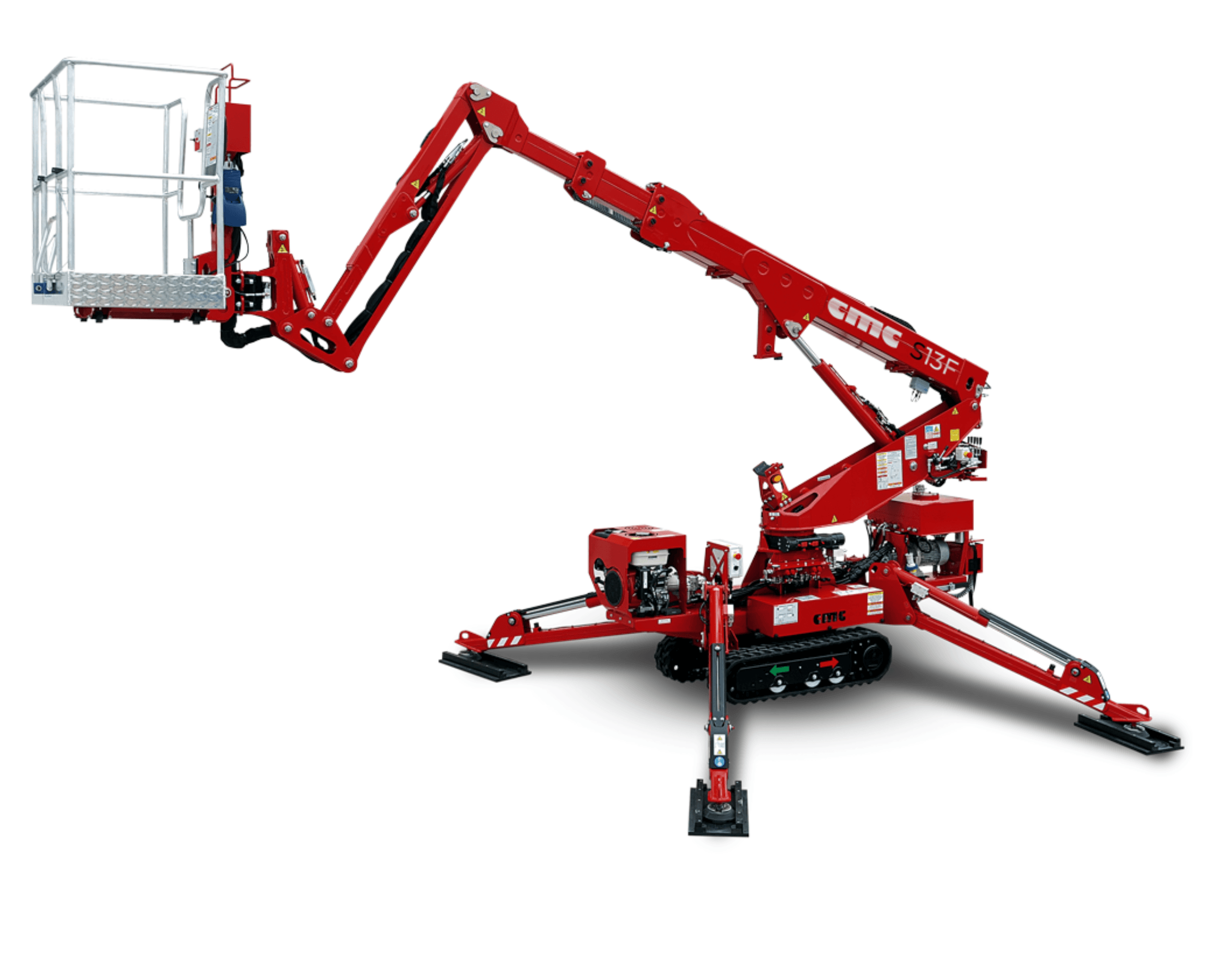
Low-Level Spider Lifts (10m–17m)
These compact models are ideal for users who need access in tight, narrow, or sensitive indoor areas. Their smaller footprint, light weight, and narrow width make them ideal for jobs where space is limited. They’re best suited for:
- Indoor Maintenance and Repairs – Shopping centres, warehouses, industrial units, museums, art galleries and large homes often require access at lower heights due to ceiling restrictions.
- Tree Work at Lower Heights – Low-level pruning, hedge cutting, and minor tree maintenance can be done safely without the need for larger equipment.
- Churches, Atriums, and Interior Buildings – Low-level models can often fit through doors and operate on delicate or polished floors thanks to their low weight.
- Properties with Restricted Access Points – If the path or garden around a property is narrow or the access is awkward, such as high garden walls being in the way, a smaller spider lift is usually the best option.
Why Choose a Low-Level Spider Lift?
- Easier to manoeuvre
- Works well in corridors and tight entrances
- Lightweight enough for sensitive surfaces
- Great value for smaller tasks
- Ideal for businesses that regularly work indoors
These lower-height models are often the most flexible and most straightforward to use.
Mid-Range Spider Lifts (18m–27m)
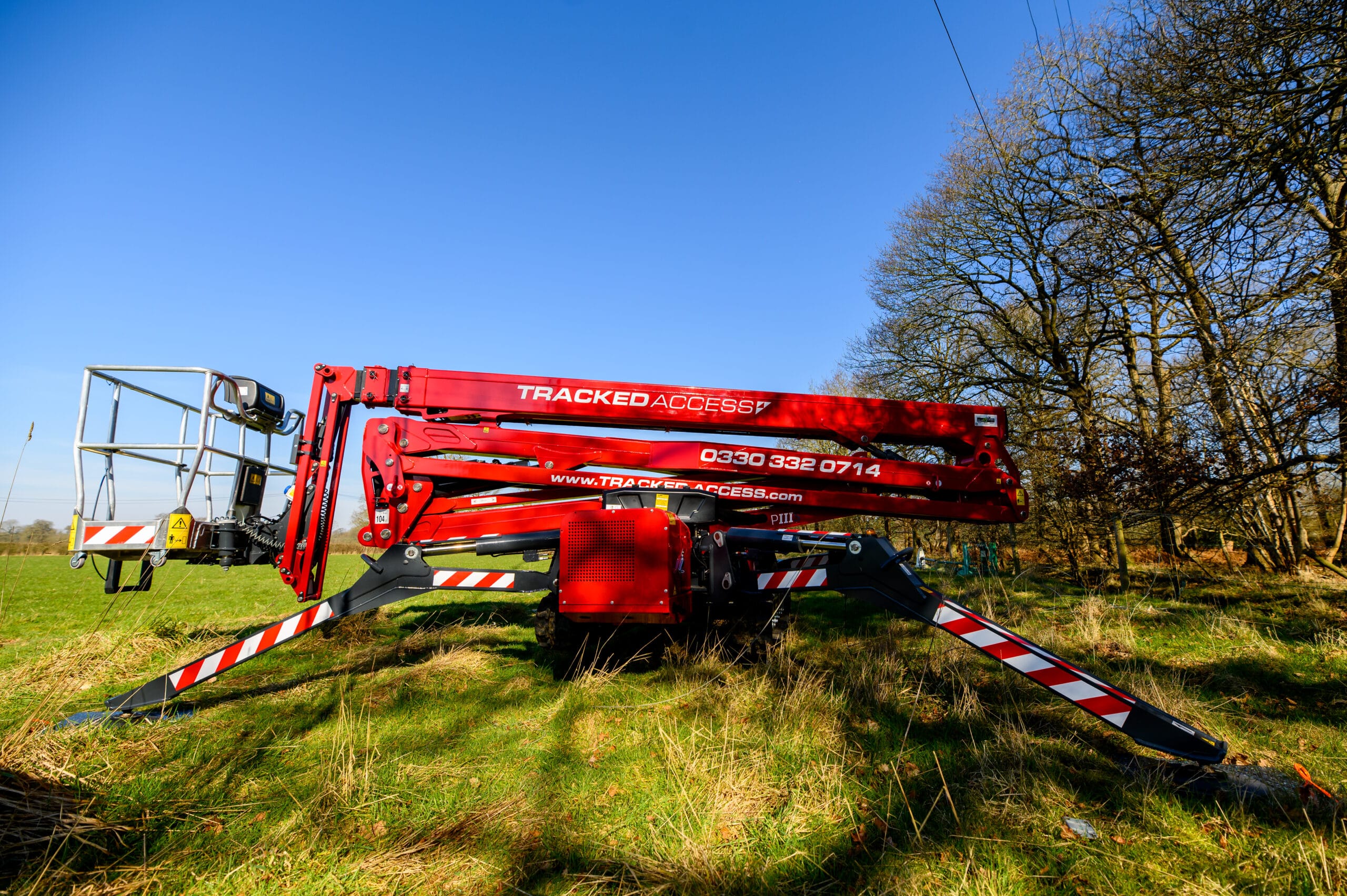
This height range is considered the “all-rounder” category. These lifts provide the ideal balance between reach, stability, and compactness. They can be used both indoors and outdoors, depending on the model, making them highly versatile. They’re best for:
- Tree Surgery and Forestry Work – Mid-rang spider lifts are ideal for medium to large-sized trees, crown reductions, and general tree maintenance.
- Domestic and Commercial Building Works – Gutters, rooflines, windows, cladding, and exterior maintenance often fall within this height range.
- Construction and Renovation – Painters, electricians, cladders, and roofers frequently rely on spider lifts in this range for working on multi-storey buildings.
- Industrial Inspection and Maintenance – Factories, warehouses, and extensive facilities benefit from mid-range machines for consistent, reliable access.
Why Choose a Mid-Range Spider Lift?
- Versatile for indoor and outdoor work
- Substantial reach without oversized weight
- Usually stable on uneven ground
- Ideal for most common commercial maintenance tasks
- Fits a wide range of access environments
Many businesses across the Midlands choose mid-range spider lifts because they’re suitable for so many different job types.
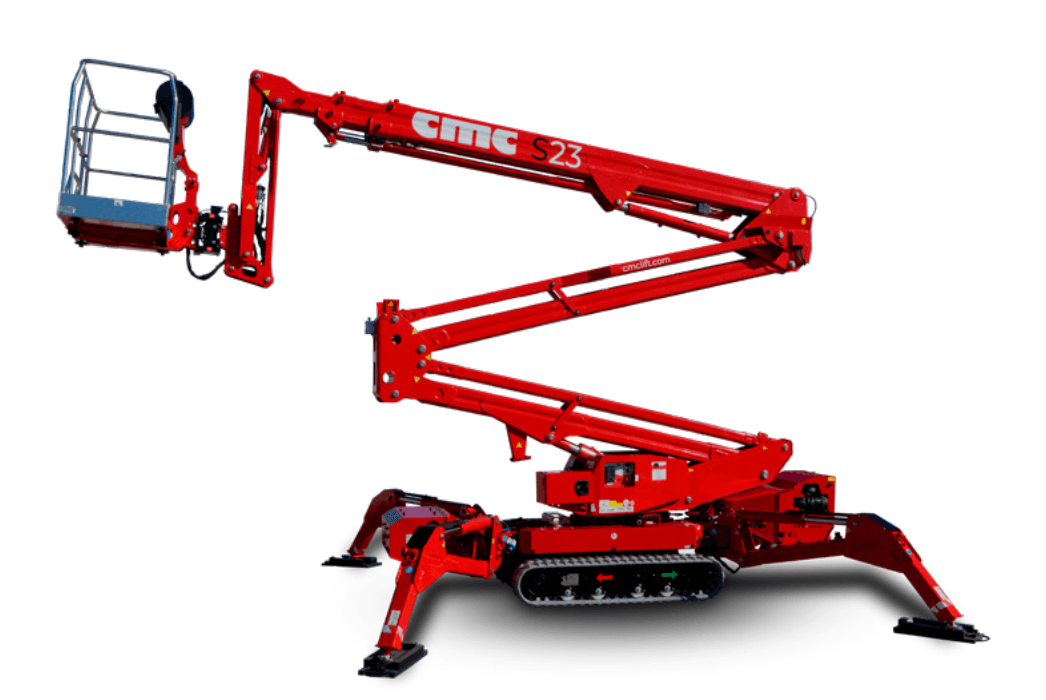
High-Reach Spider Lifts (28m–40m+)
These lifts are designed for demanding projects that require maximum height and outreach. Although they are larger, modern high-reach spider lifts remain surprisingly compact thanks to their track-based design and articulated booms. They’re best designed for:
Tall Tree Work
Tree surgeons tackling mature, high-growth trees often rely on 30m+ spider lifts as they are far safer than smaller options.
Large Commercial Buildings
Shopping centres, office blocks, apartment buildings, and stadiums all benefit from the reach of larger models as they have either very high or no ceilings at all.
Inspection and Surveying
Structural inspections, roof surveys, and specialist assessments often require access at significant heights.
Bridge and Industrial Site Maintenance
High-reach lifts give safe access to areas that would otherwise require scaffolding. Despite it’s size, using a spider lift is still easier set up and more flexible to use than scaffolding.
Why Choose a High-Reach Spider Lift?
- Outstanding vertical reach
- Allows safe work at extreme heights
- Reduces the need for scaffolding
- Provides extensive outreach for difficult angles
- Still compact enough for surprising access points
If a project involves working at high elevations, these lifts deliver the reach needed without sacrificing stability.
Which Spider Lift Height Should You Choose?
Choosing the right spider lift comes down to four simple questions to answer:
1. How High Does you Need to Go?
This is the most important question. Measure or estimate the required height accurately, adding a little buffer is always wise.
2. How Much Outreach is Needed?
If you need to work over roofs, branches, or obstacles, outreach becomes just as important as vertical height.
3. What Does the Access Route Look Like?
If you’re often working around narrow gates, tight pathways, or restricted entrances, this may determine what size is best.
4. What Surface Will you Be Working on?
Grass, gravel, indoor flooring, and slopes all influence the stability and suitability of different models.
If in doubt, the experienced team at Tracked Access can offer advice over the phone to help match the right height range to the job.
Need to Hire a Spider Lift?
Understanding the height ranges of spider lifts helps businesses choose equipment that’s safe, efficient, and suitable for their worksite. Whether its a compact lift for indoor access or a high-reach machine for tall structures and tree work, there’s a model designed for every situation
At Tracked Access, we pride ourselves on offering spider lifts across a wide range of heights, making it easy to match the right machine to any project. Whether you’re working in the city, on a commercial site, or outdoors in challenging conditions, we can help choose a model that fits your needs.
If you’re planning a project and want the right equipment from the start, contact us today for more information. Our experts can help you choose the ideal height range for any job, ensuring safe, smooth, and productive work from the very beginning.

Related Posts