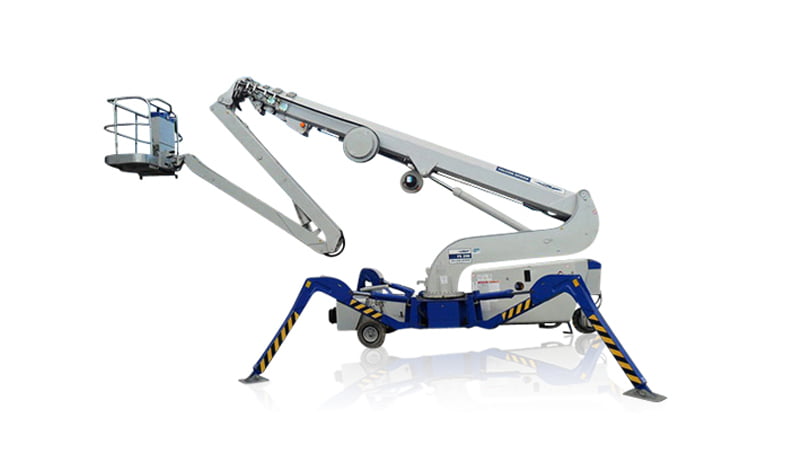
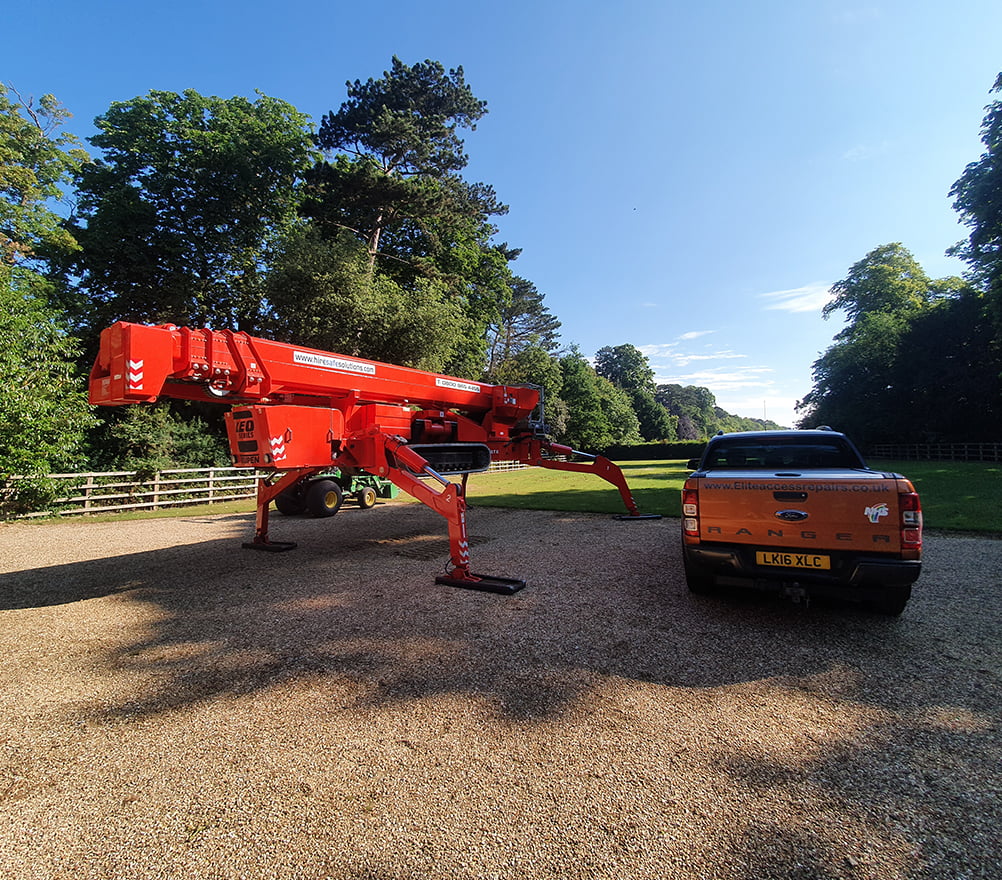
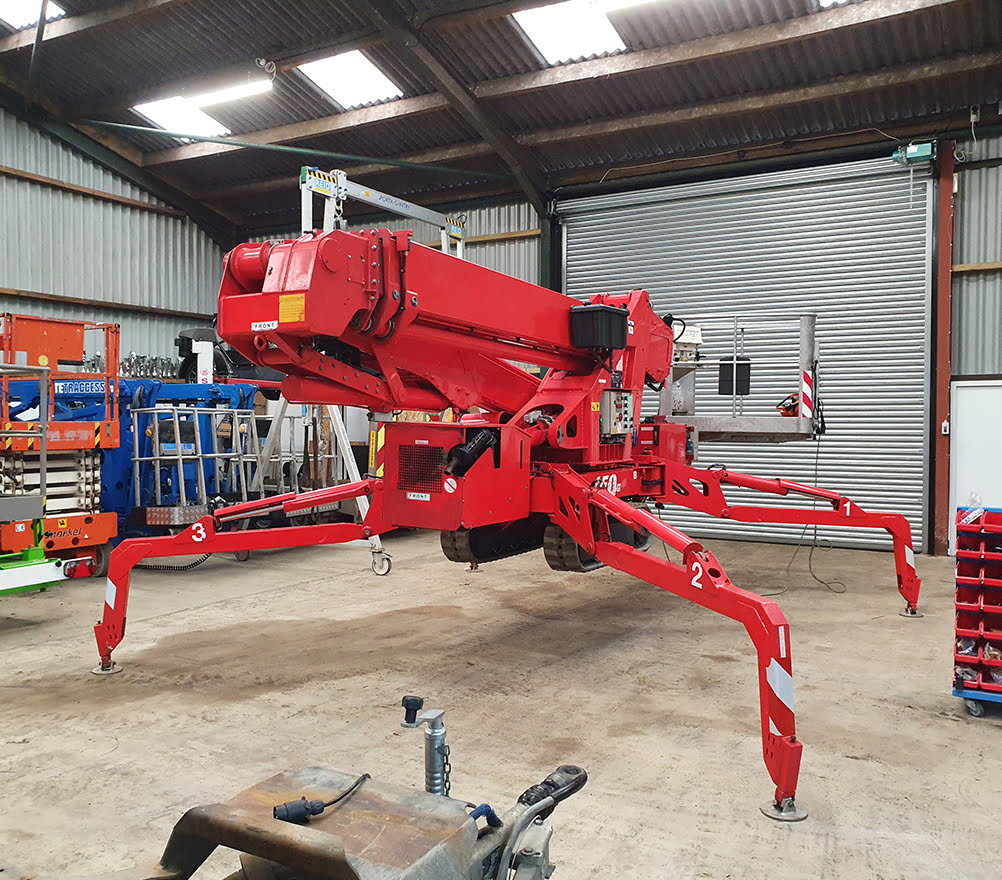
Spider lifts are aerial platforms, which are designed to provide safe, efficient access to areas…
Spider Lifts in Winter Weather: Safety Tips for Outdoor Work
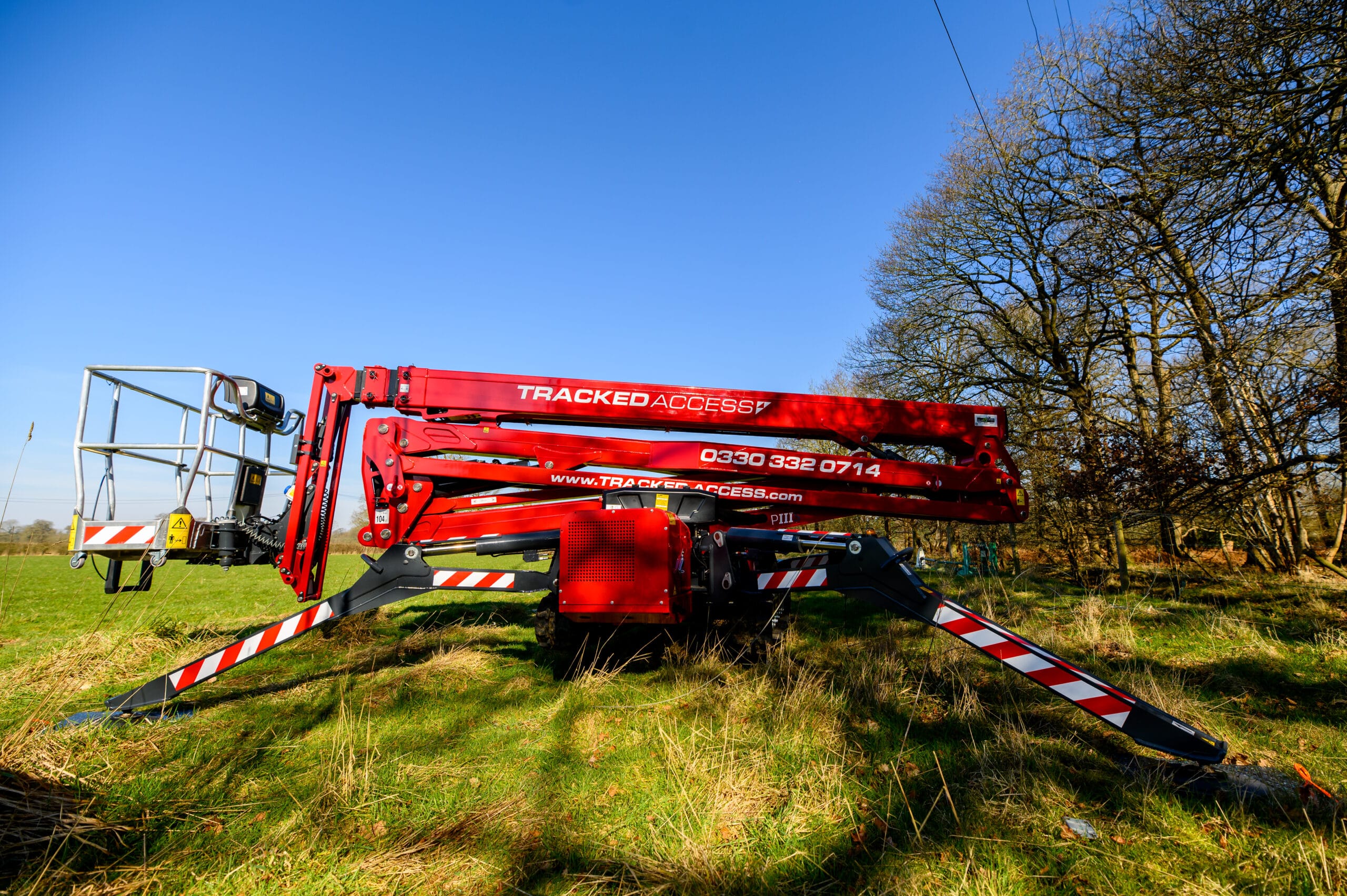
Working outdoors in winter brings unique challenges, especially when using access equipment at height. Colder temperatures, reduced daylight, wet surfaces, and icy conditions can all affect a lift’s safety and stability. For businesses that rely on spider lifts, it’s important to understand how winter weather can affect performance and to take steps to keep site staff safe. Spider lifts are designed to handle uneven ground, tight spaces, and difficult access points, which is why they’re so popular for tree work, construction, and property inspections. But even the most reliable machine needs careful handling when temperatures drop.
Understanding How Winter Weather Affects Spider Lifts
Spider lifts rely on stability, grip, and precision. Winter conditions can affect all three. Rain makes surfaces slippery, frost affects traction, and strong winds make working at height more dangerous. Cold temperatures can also slow hydraulic response and impact battery or engine performance. This doesn’t mean a spider lift is out of bounds during winter. It simply means planning ahead, checking conditions, and using the equipment correctly.
Check the Ground Conditions Before Setting Up
One of the biggest risks in winter is unstable or slippery ground. Before setting up, always check the surface for frost, ice, mud, or deep leaves. These can prevent the outriggers from stabilising correctly, increasing the risk of movement during operation. Choosing a stable, level area for setup is vital for safe operation. If the ground feels soft or uneven, it may be worth putting pads or boards under the outriggers to improve stability.
Monitor Weather Conditions Throughout the Day
Winter weather can change quickly, especially in open or exposed areas. Even if conditions look fine at the start, high winds or rain can suddenly move in. Keep an eye on changeable features such as wind speed, temperature, rain and frost formation. If conditions become unsafe, it’s always better to pause work and wait for things to settle than push ahead and increase the risk.
Ensure the Lift Is Serviced and Winter-Ready
Well-maintained equipment handles winter conditions more safely. This is especially true when hiring machinery. Choosing a reliable provider for spider lifts for hire ensures the lift is serviced, inspected, and ready for use. A winter-ready spider lift should have:
- Clean hydraulics
- Fully functioning controls
- Checked tyres or tracks
- Strong batteries or engine performance
If something doesn’t feel right during operation, stop immediately and have the lift inspected.
Give the System Time to Warm Up
Cold temperatures can make hydraulic systems sluggish. Before raising the boom, let the spider lift run for a short period so the fluid warms up and moves smoothly through the system. This helps prevent jerky movements and gives you more control when working at height.
Use Caution When Operating Near Ice, Frost, or Snow
Spider lifts can operate in winter, but operators must adjust their operations. Movements should be slow and controlled. Turning too quickly or moving the boom abruptly can make the lift unstable if the ground is slippery. Avoid:
- Working at height during snow or heavy sleet
- Positioning the lift over icy patches
- Allowing staff to walk under the boom when surfaces are wet or slippery
Clear communication between the operator and ground staff is vital during winter.
Visibility Matters More in Winter
Shorter days mean staff may have to start or finish work in low light. Good visibility is essential for safe setup and operation. Use additional lighting if necessary, and make sure work areas are clear and well-marked. Reflective clothing is also crucial, as it helps on-site personnel see the operator and ground crew more easily.
Wear Appropriate Winter PPE
Safety gear should always match the conditions. During winter, this includes warm layers, waterproofs, insulated gloves, and non-slip footwear. Cold hands can reduce grip and reaction time, so keeping warm is part of working safely. Ensure all staff have the appropriate clothing to keep them warm, and keep spares on site just in case.
Know When to Stop Work
Even the safest equipment should not be used in extreme weather. High winds are the biggest risk when working at height and can affect the boom’s stability. If wind speeds exceed the manufacturer’s limit, stop work immediately. The same applies to heavy snow, freezing rain, or severe icing. Waiting for better conditions is always safer than facing unnecessary risks.
Hiring the Right Spider Lift Makes a Difference
Choosing the right machine for winter conditions helps keep work moving safely and efficiently. Whether you need compact access for tree work, building cleaning, or winter maintenance, the right lift will make a big difference. At Tracked Access, we always ensure we:
- Supply well-maintained machines
- Offer on-site advice
- Check and service all lifts regularly
- Provide clear operating guidance
- Can train on-site teams if necessary
We won’t just deliver a machine; we always ensure everyone knows how to use it safely.
Work Safely This Winter
Winter doesn’t have to slow down your work, but it does require more awareness and preparation. With the right machine, careful setup, and simple safety checks, a spider lift can be used confidently throughout the colder months. Stable ground, good visibility, and regular weather monitoring all help keep people safe.
If you need reliable spider lifts for winter projects, Tracked Access is here to help. Every spider lift is thoroughly inspected, serviced, and prepared for safe operation before hire. We can advise you on the best machine for your project, whether you’re working in tight spaces, on uneven winter ground, or with height challenges, no matter what the weather brings. Call us today for more information on how we can help you work safely this winter.

Related Posts